What if I told you that you could launch a top-selling sleep supplement by just running a simple AI query to create a formula while you are actually dreaming? It is not exactly that easy but recent experiments raise questions about whether this is the current industry standard. I put Formulaite's audit feature to the test on ten leading multi-herb sleep supplements (according to Gemini). The results revealed that even respected household names are pushing out flawed formulations that lack basic scientific rigor. These findings indicate the market is at a concerning stage that will face an inevitable correction.
Why Are 80% of Sleep Supplements Under-Dosing Their Key Botanicals?
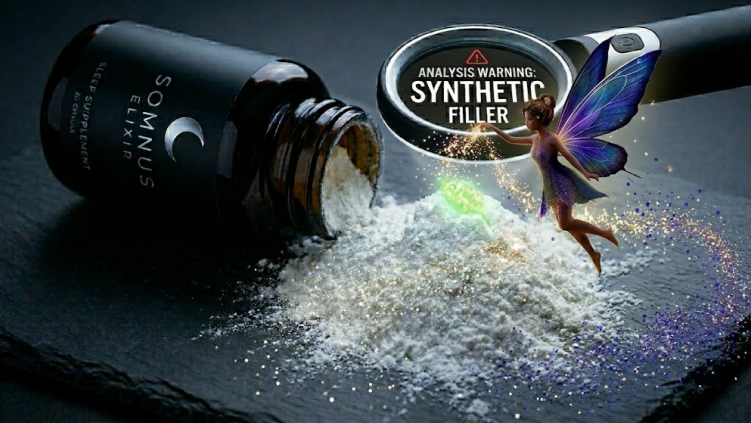
The first major issue found across many of the audited formulas is the "fairy dust" illusion where brands hide behind proprietary blends to put famous herbs on the label without providing a clinical dose. Eighty percent of the audited products drastically under-dosed their botanicals. Clinical trials show L-Theanine requires about two hundred milligrams to work and Valerian root requires between three hundred and six hundred milligrams. Yet these formulas consistently included microscopic eight to seventeen milligram flavoring doses of Chamomile or Passionflower and sometimes just twenty-five milligrams of L-Theanine. They rely on a cheap synthetic anchor like Melatonin to knock you out while the expensive herbs are just there for marketing copy.
What Is the GABA Shotgun Effect and Why Should You Care?
Next up is the "GABA shotgun" effect where brands recklessly stack central nervous system ingredients instead of aiming for targeted relief. Ninety percent of the audited products aggressively combined up to eight different sedatives that all target the exact same GABA receptors in the brain. They casually throw together high-dose Melatonin with Valerian and Lemon Balm and Lavender and Ashwagandha. While one herb might be safe on its own, this aggressive stacking creates an unpredictable sedative burden that spikes the risk of morning grogginess and dangerous interactions if a user has a simple glass of wine before bed.
Are Gummy Supplements Destroying Their Own Active Ingredients?
Moving to the delivery format, the industry obsession with "candy" delivery systems is actively destroying the active ingredients right on the shelf. Every single gummy formula audited (4 out of 10 total products) suffered from severe stability flaws. Gummies are semi-aqueous (moist) and mildly acidic from citric acid. This environment shreds fragile botanical polyphenols like the apigenin found in Chamomile. Furthermore, Melatonin degrades rapidly when exposed to light and heat, yet these gummies are almost always sold in clear aesthetic plastic jars. A gummy claiming "3 mg of Melatonin" on day one might deliver only a fraction of that by month three on a warm shelf.
What Are the Hidden Toxicity Risks in Multi-Herb Sleep Stacks?
Next is the issue of combined toxicity. Brands frequently overlook these risks because they assume natural herbs are completely inert. Sixty percent of the formulas stacked herbs like Ashwagandha and Magnolia bark which have rare but documented liver injury signals in the NIH LiverTox database. By combining these specific ingredients, the industry increases the theoretical risk for idiosyncratic liver stress. While some products on the market do provide cautionary statements, many still lack specific warning labels for people with preexisting liver conditions.
Furthermore, many audited formulas lacked adequate front-label warnings for pregnancy and allergen risks. Botanicals like Ashwagandha and Passionflower have documented uterine-stimulating properties in certain contexts, making their use a point of caution during pregnancy. Meanwhile, formulas frequently use Chamomile which belongs to the Asteraceae plant family, meaning anyone with a ragweed or daisy allergy is getting a concentrated dose of their allergen.
What Needs to Change in the Sleep Supplement Industry?
We cannot simply combine famous herbs and expect a biological miracle just because the packaging looks nice. The market is heading for a correction when consumers realize their premium sleep aids are biologically broken. Our team at Formulaite built this AI-powered formulation platform to catch these exact silent formulation failures before a product goes to prototype so we can actually build scientifically sound products without the guesswork. As we explored in The Formulation Casino, the key is moving failure from the physical world to the virtual world.
References
Sources: Clinical formulation audits and data provided by https://app.formulaite.ai/