The dirty secret of the Natural Wellness industry is that we are mass-producing "Zombie Products." We source incredible, high-potency Ayurvedic extracts—Ashwagandha, Curcumin, Saffron—and then we effectively kill them during the formulation process. The product hits the shelf looking rich and smelling earthy, but biologically, the "active soul" of the plant has left the building. We are selling expensive, herbal-scented placebos because we are ignoring the hard data on Bio-Survival.
Why Does Extraction Kill the Very Ingredients We're Trying to Use?
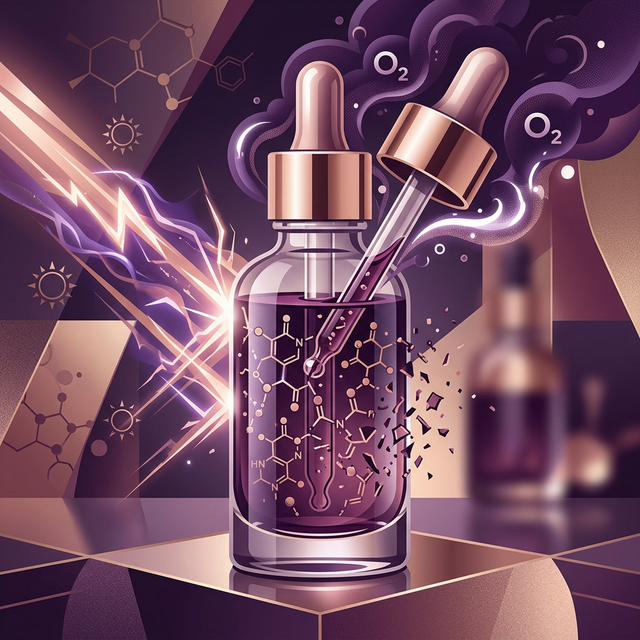
One of the primary failures begins with what we call the Extraction Strip. In nature, unstable antioxidants like Curcuminoids are protected by a complex, intelligent matrix of plant fibers and oils. When we isolate them to get a "95% Potency" claim, we strip away this natural armor. We then drop these naked, terrified molecules into water-heavy formulas where they are bombarded by oxygen. Chromatography studies show that without encapsulation, significant degradation of active compounds can occur within hours of light exposure. The tragedy is that this oxidation renders the molecule useless long before the product looks "spoiled." Consumers see the rich color and assume "potency," but the anti-inflammatory electron is gone, meaning you are applying a biologically inert pigment rather than a cure.
What Is the 500 Dalton Wall and Why Can't Most Ayurvedic Molecules Get Past It?
Absorption is the next major hurdle, specifically regarding the 500 Dalton Wall. As established by Bos and Meinardi, for a molecule to penetrate the skin barrier, it generally needs a molecular weight under 500 Daltons. While Curcumin struggles with simple solubility, other Ayurvedic hero molecules—specifically glycosides found in Ashwagandha and Saffron—are massive structures often ranging from 700 to nearly 1000 Daltons. When you formulate a simple Ayurvedic Face Oil without a delivery vehicle, you aren't doing skincare; you're putting expensive salad dressing on your face. The active ingredients simply sit on the surface, sticky and useless. You go to sleep thinking you're soaking in ancient wisdom, but you're just creating expensive pillowcase stains because the molecules are physically too fat to fit through the door.
How Does the Micellar Trap Sabotage Your Preservative System?
We also see significant issues with preservation due to the Micellar Trap. As the industry moves away from parabens to modern alternatives like Phenoxyethanol, we introduce a physics problem. In modern emulsions, we use non-ionic surfactants to blend oil and water. The problem is that Phenoxyethanol often partitions inside these surfactant micelles. It effectively gets "handcuffed" by the emulsifier, leaving the aqueous phase—where bacteria actually thrive—exposed. We see formulas passing initial challenge tests but failing in real-world conditions because the preservative is effectively hiding in the wrong part of the emulsion structure.
Why Does Mixing Ayurvedic Herbs with Modern Actives Trigger Chemical Warfare?
Chemical incompatibility is another silent destroyer, often referred to as Mineral Warfare. Ayurvedic herbs are grown in mineral-rich soil and are naturally high in transition metals like Iron and Copper. Modern actives, such as Vitamin C, hate metals. Mixing them triggers the classic Fenton Reaction, where metal ions act as catalysts that violently degrade the Vitamin C into oxidative byproducts. If you mix traditional herbs with modern actives without a chelating strategy, you end up with a brown, oxidized mess because the formulator didn't account for the trace metal analysis of the raw herb.
What Is the Real Solution to the Zombie Ingredient Problem?
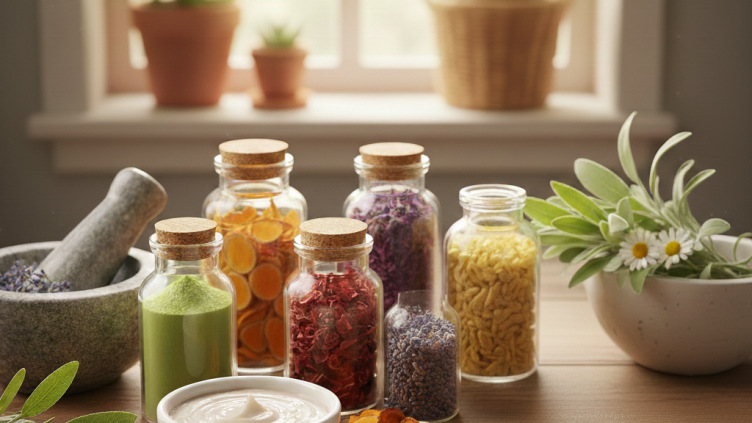
The solution requires us to stop obsessing over the vibe of the product and start respecting the quality of the vehicle. It is important to realize that the 500 Dalton limit is only a barrier for lazy formulation. Ancient Ayurveda never expected the skin to absorb raw powders dissolved in water. The Vaidyas solved this thousands of years ago with Sneha Paka, a process of boiling herbs in oil to cloak large molecules in a lipid layer.
This is why modern technologies like Phytosomes and Liposomes work. They aren't new inventions as much as they are shelf-stable iterations of that ancient engineering. By wrapping these fragile Ayurvedic molecules in a phospholipid coating, we are simply replicating the original strategy of tricking the body into recognizing the ingredient as "self." Indena's data shows this structural mimicry is the only way to ensure heavy botanicals survive the journey. It is the difference between throwing a rock at a wall and using a key to open the door. To learn how Formulaite helps brands solve these exact formulation challenges through AI-powered simulation, see how we're building the virtual lab of the future.
References
Sources: The 500 Dalton Rule: Bos, J. D., & Meinardi, M. M. (2000). The 500 Dalton rule for the skin penetration of chemical compounds and drugs. Experimental Dermatology. Curcumin Instability: Tønnesen, H. H., & Karlsen, J. (1985). Studies on curcumin and curcuminoids. VI. Kinetics of curcumin degradation in aqueous solution. Zeitschrift für Lebensmittel-Untersuchung und -Forschung. Preservative Failure: Puschmann, J., et al. (2018). Correlation of antimicrobial effects of phenoxyethanol with its free concentration in the water phase. Journal of Pharmaceutical Sciences. The Fenton Reaction: Buettner, G. R. (1993). The Pecking Order of Free Radicals and Antioxidants: Lipid Peroxidation, α-Tocopherol, and Ascorbate. Archives of Biochemistry and Biophysics. Phytosome Bioavailability: Cuomo, J., et al. (2011). Comparative absorption of a standardized curcuminoid mixture and its lecithin formulation. Journal of Natural Products. Naksuriya, O., van Steenbergen, M. J., Torano, J. S., Okonogi, S., & Hennink, W. E. (2016). A Kinetic Degradation Study of Curcumin in Its Free Form and Loaded in Polymeric Micelles. Saffron Glycoside Mass: National Center for Biotechnology Information (2024). PubChem Compound Summary for CID 5281233, Crocin.